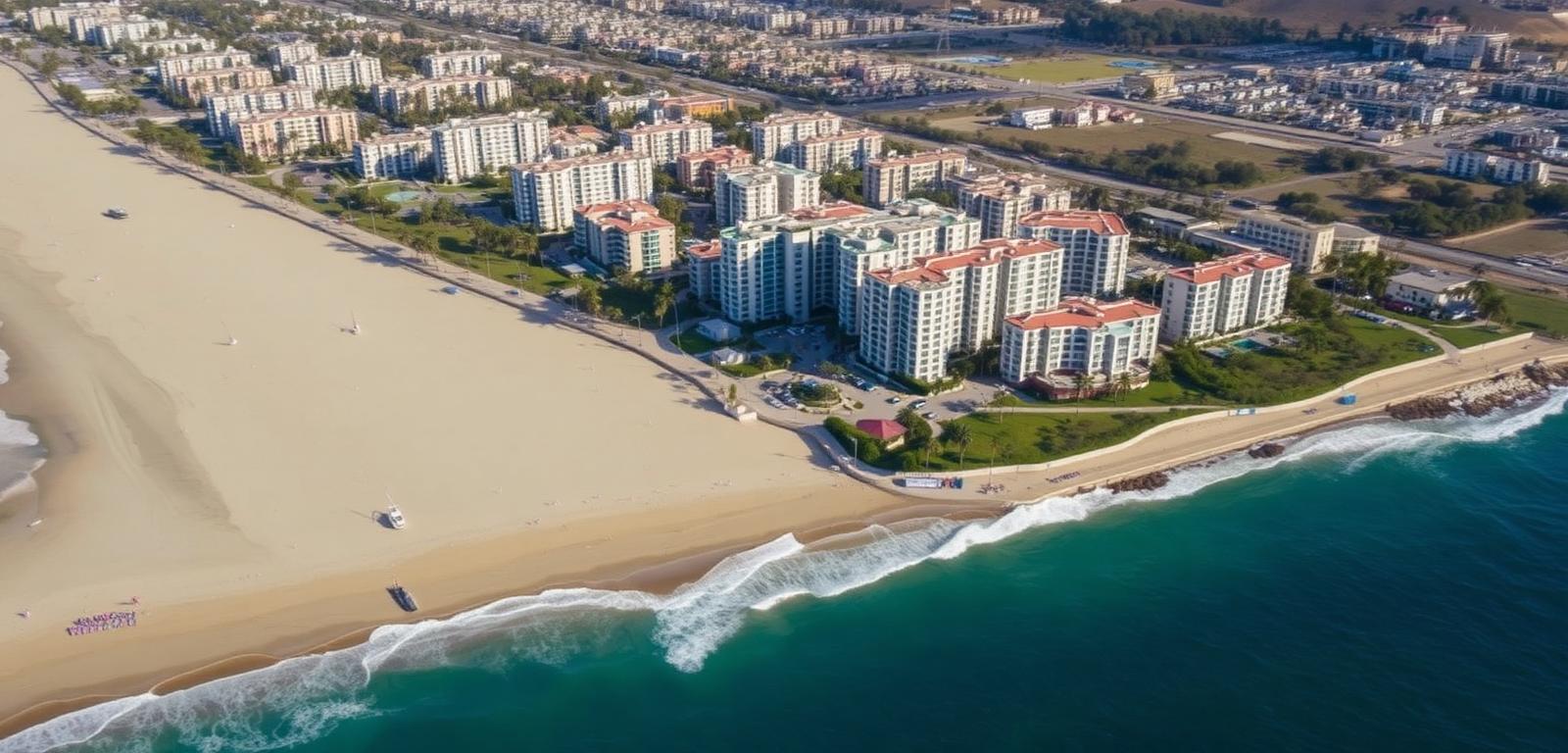
As a multifamily advisor at Lyon Stahl Investment Real Estate, I spend my days speaking directly with apartment owners and investors across the greater Los Angeles area. Over the past year, one trend has become glaringly obvious: capital is flowing aggressively toward coastal, business-friendly submarkets. Redondo Beach stands at the forefront of this movement. Nestled in the South Bay, this coastal enclave offers a unique blend of high tenant demand, limited new supply, and—most importantly—a relatively favorable regulatory environment compared to the neighboring City of Los Angeles.
Whether you have owned a duplex here for thirty years or recently acquired a larger apartment community, understanding the underlying data of the Redondo Beach multifamily market is critical to making informed decisions. In this comprehensive guide, we will explore current rent ranges, cap rate dynamics, regulatory frameworks, and practical strategies you can use to optimize your portfolio. My goal is to provide you with a no-pressure, options-first perspective so you can decide what is best for your unique financial situation.
The Redondo Beach Advantage: Coastal Appeal Meets Capital Flight
- Redondo Beach is exempt from the City of Los Angeles' Measure ULA (the "Mansion Tax").
- The market benefits directly from investors executing 1031 exchanges out of heavily regulated LA submarkets.
- Strong tenant demographics drive consistent rental demand and low vacancy rates.
- High barriers to entry and limited developable land ensure long-term asset appreciation.
The real estate landscape in Southern California shifted dramatically with the implementation of recent taxation and rent control measures in the City of Los Angeles. As an incorporated city, Redondo Beach has suddenly found itself the beneficiary of significant capital flight. When I recently closed a 4-unit property at 1027 12th St in Santa Monica for $2,050,000, and a 3-unit property at 5931 W 79th St in Los Angeles for $1,555,888, the conversations with prospective buyers consistently circled back to one central theme: avoiding harsh regulatory environments.
Investors are actively seeking safe havens where their operational upside is not artificially capped and their exit strategies are not heavily penalized by gross transfer taxes. Redondo Beach offers exactly that. Because the city does not fall under the jurisdiction of Measure ULA—which imposes a 4% to 5.5% gross tax on property sales over certain thresholds in the City of Los Angeles—owners in Redondo Beach possess a massive marketing advantage when it comes time to sell.
Furthermore, the coastal lifestyle draws a highly qualified tenant base. Renters are willing to pay a premium for access to top-tier schools, walkable neighborhoods, and proximity to major employment hubs in El Segundo, Manhattan Beach, and throughout the broader South Bay. This convergence of capital flight, regulatory relief, and strong renter demand creates a highly favorable environment for current Redondo Beach multifamily owners looking to maximize their asset's value.
Redondo Beach Rent Ranges and Submarket Divergence
- Overall median asking rent in Redondo Beach ranges from $2,950 to $3,300 per month.
- 1-Bedroom units command $2,200 to $2,650; 2-Bedrooms command $3,100 to $3,850.
- Larger 3-Bedroom+ units can achieve rents of $4,200 to well over $5,500 per month.
- The market is bifurcated: South Redondo (90277) commands a 15% to 25% premium over North Redondo (90278).
When evaluating property performance in Redondo Beach, it is essential to understand that the city operates as two distinct micro-markets: North Redondo (90278) and South Redondo (90277). While both offer excellent investment fundamentals, their tenant profiles, architectural vintages, and achievable rent metrics differ significantly.
North Redondo is traditionally commuter-oriented. Characterized by 1960s and 1970s value-add properties—including many "tall-and-skinny" homes and smaller multiplexes—this area appeals to working professionals commuting to aerospace and tech hubs in Hawthorne, Torrance, and El Segundo. Because it is inland, rents here represent the more accessible end of the spectrum. However, this is precisely where we see some of the strongest value-add opportunities for owners willing to execute cosmetic renovations.
Conversely, South Redondo is all about the coastal, walkable lifestyle. Located west of Pacific Coast Highway (PCH), this submarket offers direct beach access, proximity to the Redondo Beach Pier, and a charming village atmosphere. Properties here command a steep 15% to 25% rent premium over their northern counterparts. Tenants are often higher-income earners willing to pay top dollar for turnkey, modernized units.
Below is a comparative breakdown of how these two submarkets generally perform against one another:
| Metric | North Redondo (90278) | South Redondo (90277) | Market Difference |
|---|---|---|---|
| 1-Bedroom Rent | $2,200 - $2,400 | $2,450 - $2,650 | +10% to +15% Coastal Premium |
| 2-Bedroom Rent | $3,100 - $3,350 | $3,500 - $3,850 | +12% to +18% Coastal Premium |
| Average Cap Rate | 4.75% - 5.35% | 4.00% - 4.50% | Tighter yields in South Redondo |
| Property Vintage Focus | 1960s - 1970s (Value-Add) | Mixed / Turnkey Luxury | Commuter vs. Lifestyle focus |
For owners, understanding which submarket you operate in dictates your renovation strategy. Over-improving a North Redondo duplex might not yield the necessary ROI, whereas failing to provide luxury finishes in South Redondo could mean leaving significant money on the table.
Navigating Cap Rates and Property Valuations
- Redondo Beach cap rates currently range between 4.25% and 5.15% for stabilized assets (2–20 units).
- Prime, turnkey properties in South Redondo trade at tighter cap rates (4.00% – 4.50%).
- Value-add, unrenovated properties in North Redondo trade slightly higher (4.75% – 5.35%).
- Redondo Beach cap rates remain 40–75 basis points tighter than the broader Los Angeles County average.
- Low transaction volume and generational ownership can make accurate comps challenging to find.
Valuing multifamily real estate in today's interest rate environment requires nuance. Across the Los Angeles Coastal South Bay, capitalization rates for small-to-mid-size assets typically hover between 4.25% and 5.15%. These yields are notably tighter—often by 40 to 75 basis points—than the broader Los Angeles County average of 5.25% to 5.75%. This spread is a direct reflection of investor confidence in the South Bay's stability, the lack of municipal rent control, and the inherent scarcity of coastal land.
When determining the value of your specific property, we must look at the exact location and condition of the asset. A beautifully renovated fourplex located steps from the sand in South Redondo will attract wealth-preservation buyers. These buyers are often completing a 1031 exchange and are willing to accept a lower day-one return (a 4.00% to 4.25% cap rate) in exchange for a hassle-free, trophy asset.
On the other hand, an unrenovated 1970s six-unit building in North Redondo will attract yield-driven, value-add syndicators or aggressive private investors. These buyers are looking for upside potential and will typically require a higher entry cap rate (closer to 5.00% or 5.35%) to justify the capital expenditures required to modernize the building.
One significant caveat for owners attempting to value their own properties is the issue of low transaction volume. Redondo Beach is dominated by long-term, generational owners. Duplexes and fourplexes here rarely trade on the open market, and when they do, it is often via private, off-market channels. Small sample sizes in public MLS data can skew quarterly cap rate calculations, making it appear as though values are fluctuating more wildly than they actually are. This is why having an experienced advisor who tracks off-market activity across neighboring cities like Hermosa Beach, Manhattan Beach, and Palos Verdes Estates is vital to accurately pricing your asset.
The Regulatory Landscape for Redondo Beach Owners
- Redondo Beach does not have an independent municipal Rent Stabilization Ordinance (RSO).
- California AB 1482 (The Tenant Protection Act) applies to non-exempt properties older than 15 years.
- The current AB 1482 rent cap (August 2024 – July 2025) is 8.9%.
- Costa-Hawkins protects vacancy decontrol, allowing owners to reset rents to market rate upon turnover.
- Measure ULA does not apply to Redondo Beach, preserving your equity upon sale.
- SB 8 and SB 330 apply to redevelopment, requiring 1-for-1 replacement of protected units.
Perhaps the most compelling reason investors flock to Redondo Beach is the regulatory framework. Unlike the City of Los Angeles, Santa Monica, or West Hollywood, the City of Redondo Beach does not have its own local Rent Stabilization Ordinance (RSO). For multifamily owners, this provides a massive operational advantage, though it does not mean the market is entirely unregulated.
In the absence of a local RSO, multifamily properties in Redondo Beach fall under the jurisdiction of California Assembly Bill 1482 (The Tenant Protection Act). This state-wide legislation applies to non-exempt residential properties that are more than 15 years old—a rolling window that currently captures buildings constructed before 2009/2010. Single-family homes and separately conveyable condos are generally exempt, provided they are not owned by a real estate investment trust (REIT), a corporation, or an LLC with a corporate member, and the tenant has been provided proper written notice of the exemption.
For properties governed by AB 1482, the maximum allowable annual rent increase is capped at 5% plus the local Consumer Price Index (CPI), or 10%, whichever is lower. For the period of August 1, 2024, through July 31, 2025, the applicable CPI for the LA-Long Beach-Anaheim region puts the total allowable rent increase at 8.9%. AB 1482 also introduces statutory "just cause" eviction protections, meaning owners must have a qualifying reason to terminate a tenancy after the tenant has legally occupied the unit for 12 months. In the case of no-fault evictions (such as owner move-in or substantial remodeling), owners are required to provide relocation assistance equal to one month's rent.
Crucially, Redondo Beach owners are protected by the Costa-Hawkins Rental Housing Act. This state law preserves "vacancy decontrol," which guarantees your right to reset the rent to full market value once a tenant voluntarily vacates the unit or is lawfully evicted. This allows owners to systematically capture the upside of the market over time.
Finally, for owners considering tearing down older structures to build new units, it is important to understand the impacts of SB 8 and SB 330. These state laws govern redevelopment and require a 1-for-1 replacement of any "protected" units (units occupied by lower-income tenants or those subject to rent control) and mandate a right of return or relocation assistance for displaced tenants. Navigating these development laws requires careful planning, but the payoff in a high-demand market like Redondo Beach can be substantial.
Strategic Options for Multifamily Owners in Redondo Beach
- Hold and Optimize: Implement systematic rent increases up to the 8.9% maximum to prevent compounding loss-to-lease.
- Execute a 1031 Exchange: Leverage your ULA-free equity to trade into larger, newer, or lower-maintenance assets in out-of-state markets.
- Cash Out and Reallocate: Take advantage of strong coastal buyer demand and shift capital into alternative investments.
- Value-Add Repositioning: Renovate vacated units to capture the 15% to 25% rent premiums, especially in South Redondo.
As a multifamily owner in Redondo Beach, you are operating from a position of strength. Because the market fundamentals are so robust, you have a variety of viable strategic options depending on your personal goals, your tolerance for active management, and your timeline. Let's explore the primary avenues available to you.
First, if you prefer to hold your asset long-term, your primary focus should be on optimization. Because Redondo Beach lacks a local RSO, owners should implement regular, systematic annual rent adjustments up to the 8.9% statutory maximum provided by AB 1482. Many generational owners hesitate to raise rents on long-term tenants, but failing to do so creates a severe, compounding loss-to-lease. When it comes time to refinance or sell, this artificially depressed Net Operating Income (NOI) will significantly hurt your property's valuation. By maintaining rents near market rates, and utilizing full vacancy decontrol upon natural turnover, you protect the underlying value of your investment.
Second, for owners who are tired of managing toilets, tenants, and trash, executing a 1031 exchange is a incredibly powerful wealth-building tool. Because you are exempt from Measure ULA, you retain significantly more equity at the close of escrow than an owner selling a similar building in West LA or Venice. You can take this untaxed equity and exchange into a larger apartment building in a landlord-friendly state, or transition entirely into passive, absolute Net-Lease (NNN) commercial properties. This allows you to maintain your cash flow while eliminating management headaches.
Lastly, if you decide it is simply time to move on, cashing out is a highly viable option. The demand for Redondo Beach real estate from institutional buyers, private syndicators, and local high-net-worth individuals is immense. Buyers from Culver City, Beverly Hills, and Brentwood are constantly looking to move their capital into the South Bay to escape city regulations. By correctly pricing and marketing your asset, you can achieve a premium valuation even in a shifting interest rate environment.
Next Steps: Positioning Your Portfolio for the Future
- Take inventory of your current rents versus the Redondo Beach market medians.
- Ensure your leases are fully compliant with AB 1482 disclosures.
- Consult with an advisor to determine your property's highest and best use.
Navigating the nuances of the South Bay multifamily market requires a clear understanding of both hyper-local data and macro-economic trends. Whether you own a vintage duplex in North Redondo, a luxury fourplex in South Redondo, or assets stretching down through Torrance, Lomita, and the Palos Verdes Peninsula, your property is a highly desirable asset in today's climate.
My approach is always advisory and options-first. If you are curious about how your property compares to recent sales, or if you simply want to discuss the mechanics of moving capital out of California, I invite you to reach out for a confidential strategy session. By proactively managing your real estate portfolio, you ensure that your hard-earned equity continues to work effectively for you and your family.
Frequently asked questions
Does Redondo Beach have a local rent control ordinance?
No, the City of Redondo Beach does not have an independent municipal Rent Stabilization Ordinance (RSO). However, most multifamily properties older than 15 years are subject to the statewide rent caps and eviction protections mandated by California AB 1482.
Does Measure ULA apply to properties sold in Redondo Beach?
No. Measure ULA (often called the "Mansion Tax") only applies to properties located within the incorporated City of Los Angeles. As an independent city, Redondo Beach transactions are exempt from this 4% to 5.5% gross transfer tax, making it highly attractive to investors.
What is the difference between investing in North Redondo vs. South Redondo?
North Redondo (90278) is generally more commuter-focused with 1960s/1970s vintage properties that offer strong value-add potential at slightly higher cap rates. South Redondo (90277) is west of PCH, offering a walkable coastal lifestyle that commands a 15% to 25% rent premium and attracts wealth-preservation investors at tighter cap rates.
How much can I raise rents in Redondo Beach right now?
For properties subject to AB 1482, the maximum allowable rent increase from August 1, 2024, through July 31, 2025, is 8.9%. This is calculated based on a 5% base increase plus the applicable local CPI (3.9%). If a unit naturally turns over, Costa-Hawkins allows you to reset the rent to full market value.
RELATED READING