Hello, I am David Messiah, a multifamily advisor here at Lyon Stahl Investment Real Estate. Over the course of my career, I have guided countless investors and property owners through the complex, ever-evolving landscape of the Los Angeles multifamily market. Whether I am analyzing high-yield assets in Hawthorne or navigating rent control nuances in West LA, my fundamental goal remains the same: to provide clarity, minimize your risk, and maximize your return on equity.
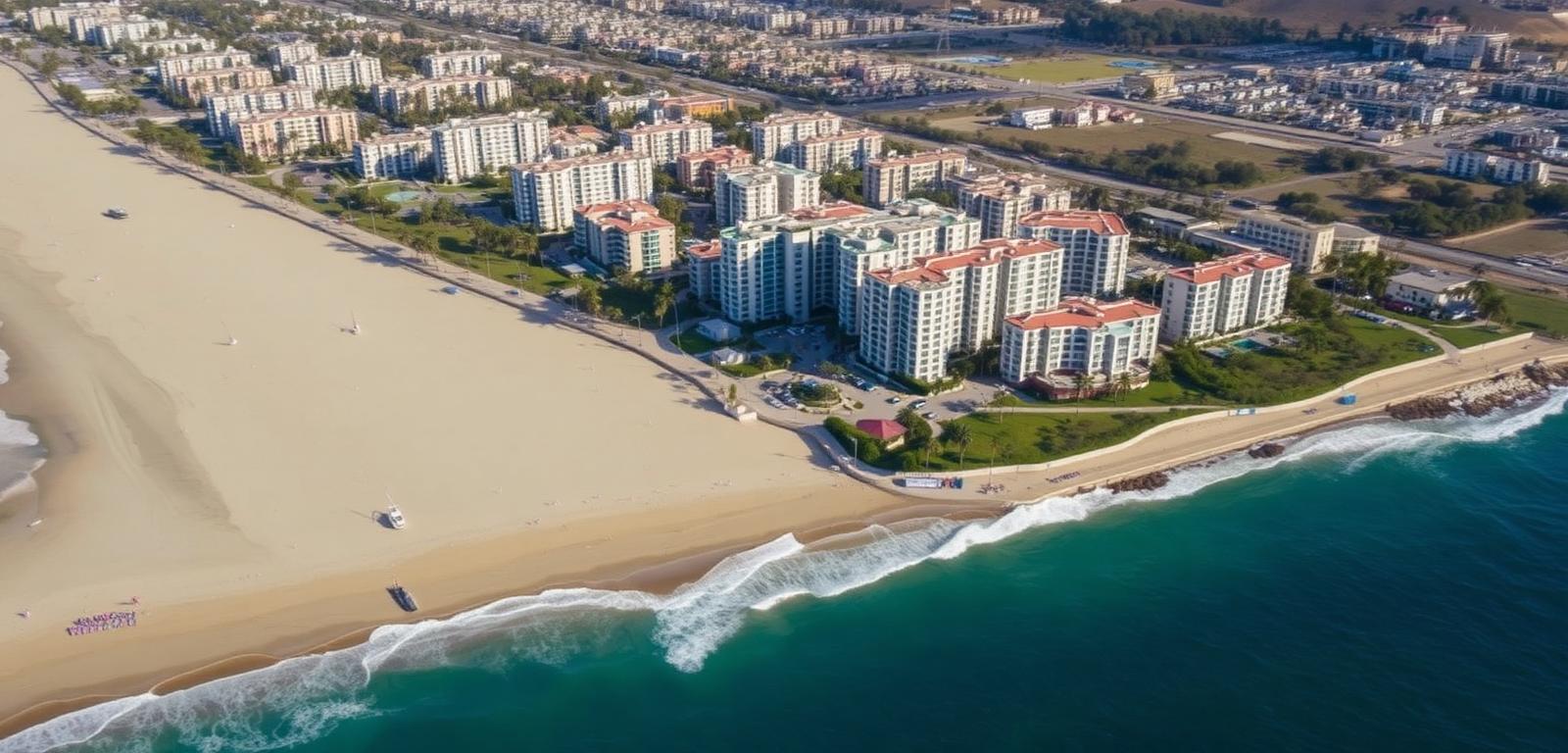
Today, I want to focus on one of the most unique, sought-after, and frankly, exclusive coastal submarkets in Southern California: Manhattan Beach. Situated in the premier stretch of the South Bay, Manhattan Beach is a high-barrier-to-entry market characterized by top-tier public schools, unparalleled ocean access, and exceptionally strong demographics.
However, owning income-producing property in this ultra-prime enclave requires a specialized understanding of both local and statewide regulations, shifting tenant demands, and highly specific neighborhood dynamics. If you own a duplex, triplex, or mid-sized apartment building in Manhattan Beach, this guide is designed to provide you with a comprehensive, no-pressure overview of where the market stands today, what your operational advantages are, and how you can strategically position your asset for the future.
The Manhattan Beach Multifamily Market Overview
- Ultra-Prime Coastal Location: Exceptional demand driven by lifestyle, ocean proximity, and the award-winning Manhattan Beach Unified School District.
- Inventory Composition: Heavily weighted toward 2–4 unit properties (duplexes, triplexes, fourplexes), particularly in the Sand and Tree sections.
- Limited Mid-Sized Assets: A small scattering of 5+ unit garden-style communities exists primarily along the Sepulveda Boulevard corridor and in inland East Manhattan Beach.
- Low Transaction Volume: High rates of generational ownership lead to very low turnover, making generalized market averages highly susceptible to skew from individual sales.
Manhattan Beach is not your typical Southern California multifamily market. While submarkets like Culver City, Palms, or Gardena offer robust inventories of mid-sized apartment buildings transacting on a regular basis, Manhattan Beach is inherently constrained. The city is essentially built out, and coastal zoning restrictions heavily limit new, high-density development. As a result, the existing multifamily stock is incredibly precious.
The inventory here is deeply bifurcated by neighborhood. If you own property in the "Sand Section"—the densely packed, highly walkable neighborhood immediately adjacent to the beach—your asset is likely a 2- to 4-unit property. These buildings frequently trade primarily on land value and ocean views rather than traditional income metrics. Buyers in the Sand Section are often owner-users looking to occupy the primary unit while renting out the others to offset their mortgage, or high-net-worth families parking capital in an ultimate wealth-preservation asset.
Conversely, as you move inland toward the "Tree Section," the "Hill Section," and "East Manhattan" (east of Sepulveda Boulevard), the lots become slightly larger and more traditional suburban in feel. East Manhattan is where you will occasionally find mid-sized garden communities. These inland properties trade much closer to traditional investment fundamentals, though still at a significant coastal premium.
Because the total inventory of multifamily parcels is small, the transaction volume in Manhattan Beach is remarkably low. Many families hold these properties across multiple generations. As an owner, this scarcity works entirely in your favor. When a well-maintained duplex or fourplex finally hits the market, the buyer pool is deep, highly qualified, and willing to pay a premium for entry into this exclusive zip code.
Current Rent Dynamics and Cap Rates
- 1-Bedroom Rents: $2,800 – $3,900/month
- 2-Bedroom Rents: $4,200 – $6,500/month
- 3-Bedroom+ / Luxury: $7,500 – $14,000+/month
- Average Price Per Square Foot: $4.50 – $6.50/sq. ft. (exceeding $7.50/sq. ft. for premier Sand Section units).
- Market Cap Rates: 3.50% – 4.50%
Due to its status as a world-class beach city, Manhattan Beach commands some of the highest residential rents not just in the South Bay, but in all of Southern California. The tenant base is heavily skewed toward high-earning professionals, young executives, and families seeking access to one of the state's best public school systems without the commitment of a $3 million-plus single-family home purchase.
The rent metrics listed above reflect the going market rates for newly leased units. Of course, due to state rent regulations (which we will discuss shortly), long-term legacy tenants may be paying significantly below these market averages. However, for a fully renovated unit with modern finishes, in-unit laundry, and parking, the ceiling for rents in Manhattan Beach is staggering. Large, luxury 3-bedroom units—essentially functioning as single-family home alternatives—frequently command upwards of $10,000 per month, particularly if they feature ocean views or immediate beach access.
When we look at capitalization rates (cap rates), Manhattan Beach behaves like a pure wealth-preservation market. Generally, the market range is a compressed 3.50% to 4.50%. To put this into perspective, buyers are accepting lower day-one cash flow in exchange for historical appreciation, extreme tenant quality, and unparalleled downside protection.
Properties in the Sand Section frequently trade below a 3.50% in-place cap rate, sometimes dipping into the high 2% range. The buyers in this tier are rarely reliant on heavy leverage; they are deploying cash or conducting 1031 exchanges from highly appreciated assets. By contrast, value-add properties along the Sepulveda corridor or deeper into East Manhattan Beach will trade closer to the 4.25% to 4.75% range, offering a slightly better yield for investors willing to undertake repositioning efforts.
Here is how Manhattan Beach compares to other highly desirable coastal markets nearby:
| Metric | Manhattan Beach | Venice (City of LA) | Santa Monica |
|---|---|---|---|
| Local Rent Control (RSO)? | No | Yes | Yes |
| Measure ULA Tax? | No | Yes (4.0% - 5.5%) | Yes (Tiered SM Tax) |
| Average Cap Rate | 3.50% - 4.50% | 4.00% - 5.00% | 3.75% - 4.75% |
| Short-Term Rentals | Banned (<30 days) | Highly Restricted | Highly Restricted |
The Regulatory Environment: What Owners Need to Know
- Measure ULA Exemption: Manhattan Beach is an independent incorporated municipality; the City of LA's "Mansion Tax" does not apply.
- No Local RSO: The city does not enforce a municipal Rent Stabilization Ordinance.
- Statewide AB 1482 Applies: Properties over 15 years old are subject to a 5% + local CPI rent cap (currently 8.8% for LA County) and just-cause eviction rules.
- Costa-Hawkins Protections: Vacancy decontrol is preserved, meaning rents reset to market rate upon voluntary turnover.
- Short-Term Rentals: Strictly banned for any stay under 30 days.
One of the absolute strongest selling points—and operational advantages—of owning multifamily property in Manhattan Beach is the local regulatory environment. In a time when property owners in neighboring jurisdictions feel increasingly burdened by municipal overreach, Manhattan Beach remains relatively hands-off.
First and most importantly is the exemption from Measure ULA. Measure ULA, colloquially known as the "Mansion Tax," levies a massive 4% tax on real estate sales over $5.15 million, and 5.5% on sales over $10.3 million (adjusted for 2024 thresholds) strictly within the City of Los Angeles. Because Manhattan Beach is its own independent city, your property is completely immune to this tax. When marketing properties for sale, we lean heavily on this fact. An investor choosing between a $6 million fourplex in Venice (subject to a $240,000 ULA tax paid by the seller) versus a $6 million fourplex in Manhattan Beach will recognize the vast difference in net proceeds and transaction friction.
Secondly, Manhattan Beach does not have a local Rent Stabilization Ordinance (RSO). Cities like Santa Monica, West Hollywood, and Los Angeles have local RSOs that often cap rent increases at historically low percentages and severely limit an owner's ability to reposition an asset. While Manhattan Beach lacks a local RSO, you are still subject to AB 1482, the statewide Tenant Protection Act. If your building is older than 15 years (which the vast majority of Manhattan Beach duplexes and triplexes are), you are capped at an annual rent increase of 5% plus the local CPI, which totals 8.8% for LA County through July 2024. Additionally, AB 1482 imposes just-cause eviction requirements for tenants who have lived in the unit for more than 12 months.
Fortunately, California's Costa-Hawkins Rental Housing Act still protects vacancy decontrol. This means that when a tenant voluntarily moves out, you have the absolute legal right to raise the rent to whatever the open market will bear before the AB 1482 caps apply to the new tenancy.
Finally, you must be aware of the city's strict prohibition on short-term rentals. Operating an Airbnb or VRBO for stays under 30 days is illegal in all residential zones of Manhattan Beach. The city aggressively enforces this ordinance, levying heavy fines on violators. Therefore, if you are looking to boost yield through hospitality models, you must pivot your strategy.
Strategic Operations and Value Enhancement
- Focus on Mid-Term Furnished Rentals (30+ Days): Target corporate relocations, insurance housing, and seasonal residents.
- Execute Capital Improvements at Turnover: Utilize vacancy decontrol to renovate and achieve top-of-market rents.
- Leverage Substantial Remodel Provisions (With Caution): Understand the legal pathways under AB 1482 for major renovations.
- Proactive Property Management: Cater to a high-end tenant base that expects premium service and finishes.
Given the operational realities outlined above, how should you optimally manage your Manhattan Beach asset? My primary advice to clients who are unhappy with low legacy rents is to explore the mid-term rental market. Because stays under 30 days are strictly prohibited, the sweet spot for maximizing yield is 30- to 90-day furnished rentals.
Manhattan Beach is a major hub for corporate executive relocations, particularly with the aerospace and tech industries headquartered in nearby El Segundo and Hawthorne. Additionally, there is a constant demand for "insurance housing"—temporary, high-end accommodations for local homeowners whose primary residences are undergoing major repairs or renovations. By furnishing a vacant unit with high-quality, coastal-modern decor and marketing it to these specific demographics, you can achieve monthly rental rates that far exceed standard 12-month lease figures, all while remaining perfectly compliant with local laws.
When standard long-term units turn over, executing strategic capital improvements is critical. The tenant demographic in Manhattan Beach expects premium finishes. Slapping a fresh coat of paint on a tired, 1980s-era unit is a missed opportunity. To achieve the $5,000+ per month rents for a 2-bedroom unit, you need quartz or marble countertops, high-end stainless steel appliances, modern plank flooring, recessed lighting, and crucially, an in-unit washer and dryer. Because there is no local RSO, you can safely invest capital into the unit knowing you can capture the full market upside upon lease-up.
If you have a severely distressed unit occupied by a long-term tenant paying well below market rent, AB 1482 does contain a provision allowing for a no-fault just-cause eviction if the owner intends to substantially remodel the property. However, this is a highly regulated process. The remodeling work must require permits and must be extensive enough that it cannot be completed safely with the tenant in place for more than 30 days. You must also provide the tenant with relocation assistance equal to one month's rent. I highly advise consulting with a specialized landlord-tenant attorney before attempting a substantial remodel eviction to ensure flawless compliance.
When working with clients, I always emphasize looking at the broader portfolio context. For instance, I recently advised on the sale of a 4-unit property at 1027 12th St in Santa Monica that closed for $2,050,000. In that transaction, the seller was motivated by a desire to escape Santa Monica's heavy rent control regulations. A Manhattan Beach owner, by contrast, already enjoys a much freer regulatory environment. Your strategic operational choices here should be less about regulatory defense and more about maximizing the premium coastal advantage you already possess.
1031 Exchange Considerations and Market Exit Strategies
- Evaluate Return on Equity (ROE): Calculate what your trapped equity is actually earning you in today's market.
- Trading for Yield: Consider exchanging into higher-cap rate submarkets like El Segundo, Torrance, or out-of-state markets.
- Consolidating Assets: Selling a management-intensive property to buy a newer, low-maintenance asset or NNN commercial property.
- Navigating the Transition: Using 1031 exchanges to defer capital gains and reset depreciation schedules.
Despite the undeniable prestige and safety of owning in Manhattan Beach, there comes a time in every investor's lifecycle when holding the asset no longer aligns with their financial goals. The most common scenario I encounter is an owner who has held a duplex or triplex for 20 years. The property is free and clear, and its value has skyrocketed from $1.5 million to $4.5 million. However, because of long-term tenants, the actual net operating income (NOI) is only $90,000 a year.
In this scenario, the owner is sitting on $4.5 million in equity, but generating a mere 2% return on that equity. While the initial investment was brilliant, the capital is now severely underperforming relative to what it could earn elsewhere.
If cash flow is your primary objective in retirement, or if you simply want to increase your monthly income, utilizing 1031 exchange strategies is often the optimal path forward. By selling your low-yielding Manhattan Beach property, you can defer all federal and state capital gains taxes and transfer that equity into a higher-yielding asset.
For example, we frequently help South Bay owners trade their $4 million Manhattan Beach duplex into an 8-unit or 10-unit apartment building in a neighboring, business-friendly city like El Segundo, Torrance, or Lomita. These submarkets offer significantly higher cap rates (often in the 5.00% to 5.50% range) while still keeping the capital within the safe, economically diverse confines of the South Bay. Alternatively, some clients choose to leave California entirely, exchanging into passive, triple-net (NNN) commercial properties or large multifamily syndications in landlord-friendly states like Texas, Tennessee, or Florida.
Whatever your situation—whether you are looking to optimize your current rent roll, navigate the complexities of AB 1482, or quietly explore an exit—my approach is always advisory and options-first. There is no one-size-fits-all strategy in real estate, particularly in a market as nuanced as this one.
If you would like to explore what your property might trade for in today's market, or if you simply want to discuss how to increase your cash flow while remaining compliant with current laws, please feel free to request a complimentary valuation. We can sit down, review your rent roll, and craft a personalized strategy that puts your financial goals first.
Frequently Asked Questions
Does Measure ULA apply to Manhattan Beach multifamily sales? No. Measure ULA (the "Mansion Tax") applies exclusively to real estate transactions within the City of Los Angeles. Because Manhattan Beach is an independent, incorporated municipality, property sales here are subject only to standard LA County documentary transfer taxes, saving sellers significant capital.
Can I operate an Airbnb or short-term rental in Manhattan Beach? No. The City of Manhattan Beach strictly prohibits any residential rentals for a period of less than 30 days. To maximize yield on furnished rentals, owners must target the 30- to 90-day mid-term rental market, catering to corporate relocations and seasonal residents.
Is there rent control in Manhattan Beach? Manhattan Beach does not have a local Rent Stabilization Ordinance (RSO). However, the state-wide rent control law, AB 1482, applies to most multifamily properties over 15 years old. This state law currently caps annual rent increases at 5% plus the local CPI (totalling 8.8% for LA County through July 2024) and requires just cause for evictions.
What is a typical cap rate in Manhattan Beach? Because it is an ultra-prime, coastal wealth-preservation market, cap rates in Manhattan Beach are quite low, typically ranging from 3.50% to 4.50%. Properties in the highly desirable Sand Section frequently trade below a 3.50% cap rate, with buyers heavily prioritizing land value, appreciation, and security over day-one cash flow.
Frequently asked questions
Does Measure ULA apply to Manhattan Beach multifamily sales?
No. Measure ULA (the "Mansion Tax") applies exclusively to real estate transactions within the City of Los Angeles. Because Manhattan Beach is an independent, incorporated municipality, property sales here are subject only to standard LA County documentary transfer taxes, saving sellers significant capital.
Can I operate an Airbnb or short-term rental in Manhattan Beach?
No. The City of Manhattan Beach strictly prohibits any residential rentals for a period of less than 30 days. To maximize yield on furnished rentals, owners must target the 30- to 90-day mid-term rental market, catering to corporate relocations and seasonal residents.
Is there rent control in Manhattan Beach?
Manhattan Beach does not have a local Rent Stabilization Ordinance (RSO). However, the state-wide rent control law, AB 1482, applies to most multifamily properties over 15 years old. This state law currently caps annual rent increases at 5% plus the local CPI (totalling 8.8% for LA County through July 2024) and requires just cause for evictions.
What is a typical cap rate in Manhattan Beach?
Because it is an ultra-prime, coastal wealth-preservation market, cap rates in Manhattan Beach are quite low, typically ranging from 3.50% to 4.50%. Properties in the highly desirable Sand Section frequently trade below a 3.50% cap rate, with buyers heavily prioritizing land value, appreciation, and security over day-one cash flow.
RELATED READING