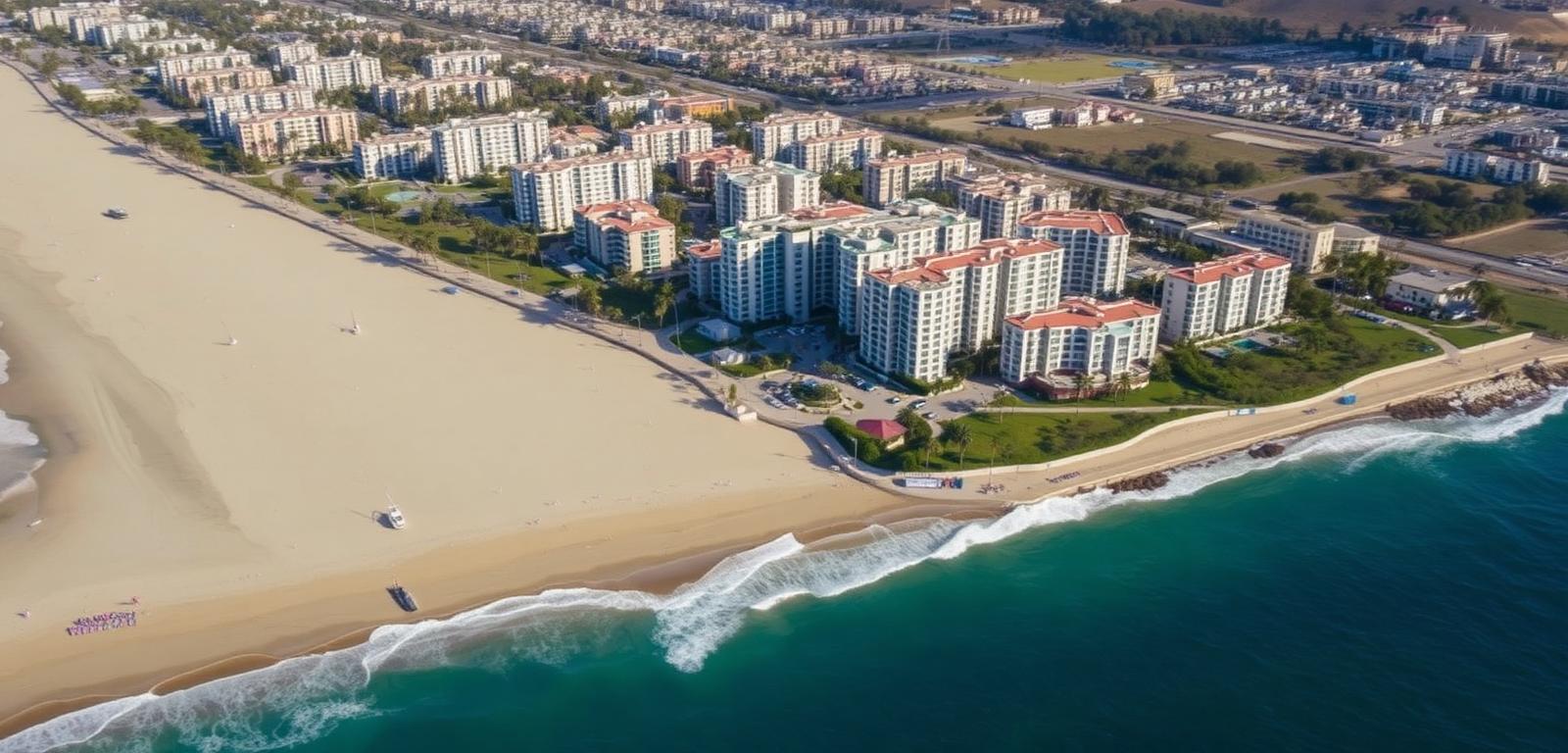
As a multifamily advisor here at Lyon Stahl Investment Real Estate, I speak with Los Angeles property owners every single day. The most frequent question I am asked is, "David, what is my building actually worth in today's market?" Valuing a multifamily asset in Los Angeles is not as simple as looking at neighboring single-family home sales or plugging gross revenue numbers into an automated online calculator. Our regional market is incredibly nuanced, deeply fragmented by dozens of different micro-markets, and governed by some of the most complex rent control legislations in the entire country.
Whether you own a four-unit building in Santa Monica, a ten-unit complex in the San Fernando Valley, or a mid-size apartment community down in the South Bay, understanding exactly how institutional buyers, private capital investors, and professional appraisers underwrite your property is the very first step toward making informed, strategic decisions. My approach to advising owners is always options-first and entirely no-pressure. Before you even consider selling, executing a [1031 exchange](/1031-exchange), or refinancing to pull out equity, you need absolute clarity on where your asset's value stands today.
In this comprehensive guide, we are going to pull back the curtain on the exact underwriting methodologies, regulatory factors, and on-the-ground market realities that dictate Los Angeles multifamily valuations.
The Core Valuation Metrics: Cap Rate, GRM, and Price Per Unit
- Cap rates in Los Angeles County vary significantly by property type, location, and condition, and are best determined through a property-specific valuation.
- Gross Rent Multiplier (GRM) typically ranges from 11.0x to 15.5x, functioning as a vital secondary check against the primary income approach.
- Average monthly rents vary drastically by region, ranging from $2,200 across the broader LA Metro to over $3,900 in premium coastal neighborhoods.
When we sit down to determine a professional [property valuation](/valuation) for your asset, the primary engine driving our analysis is the Income Capitalization Approach. This methodology relies on two distinct numbers: your property's Net Operating Income (NOI) and the market Capitalization Rate (Cap Rate). Your NOI is calculated by taking your gross collected income and subtracting all operating expenses—such as property taxes, insurance, utilities, maintenance, and property management fees. We do not include your mortgage payments in this calculation, as financing is specific to the owner, not the property itself.
Once we have your true NOI, we divide it by the market cap rate to determine value. Cap rates represent the expected rate of return on a real estate investment property based on the income it is expected to generate. Market cap rates vary widely and are not a one-size-fits-all number. For example, if you own a Class A or Prime Core asset in the Westside or South Bay—areas like Santa Monica, Venice, Manhattan Beach, or Hermosa Beach—buyers are willing to accept lower yields for the safety and appreciation potential of the neighborhood. Conversely, if your building is a Class B or C property in the San Fernando Valley, Koreatown, or East LA, investors demand a higher yield for the increased management intensity. The correct cap rate for your building is best determined through a property-specific valuation that accounts for these nuances.
As a secondary sanity check, we also look at the Gross Rent Multiplier (GRM). The GRM is calculated by dividing the property's purchase price by its gross annualized rent. In Los Angeles, GRMs typically range from 11.0x to 15.5x. A higher GRM usually indicates a property with low in-place rents but significant future upside, while a lower GRM might indicate an asset operating closer to its maximum market potential. Finally, we look at Price Per Unit and Price Per Square Foot to ensure the calculated value aligns with recent comparable sales in your specific zip code.
| Submarket / Region | Avg. Monthly Rents | Typical GRM Range |
|---|---|---|
| Westside & Coastal (Santa Monica, Venice, Marina del Rey) | $3,100 - $3,900 | 13.5x - 15.5x |
| Central LA (Koreatown, Hollywood, Mid-City) | $2,000 - $2,550 | 11.0x - 13.0x |
| San Fernando Valley (Sherman Oaks, Van Nuys, North Hollywood) | $2,100 - $2,650 | 11.5x - 13.5x |
How Rent Control (RSO) and AB 1482 Alter Property Value
- The City of LA Rent Stabilization Ordinance (RSO) strictly caps annual rent increases for buildings constructed on or before October 1, 1978.
- The Costa-Hawkins Rental Housing Act preserves "vacancy decontrol," allowing landlords to reset rents to current market rates once an RSO unit voluntarily turns over.
- California's AB 1482 applies a rolling 15-year rent cap limit to properties not covered by local RSO, restricting increases to 5% plus local CPI.
In Los Angeles, a building's physical bricks and mortar are often less important to its value than the regulatory framework governing its tenant roster. Property value in our market is strictly decoupled between assets that fall under severe rent control and those that operate closer to free-market conditions. If your multi-unit property was built on or before October 1, 1978, and is located within the City of Los Angeles, it is subject to the Rent Stabilization Ordinance (RSO). The RSO strictly caps the percentage by which you can raise a tenant's rent each year. Over a long hold period, this creates a massive gap between what long-tenured tenants are paying and what the unit could lease for on the open market. In valuation terms, we call this gap "loss-to-lease."
A high loss-to-lease severely suppresses your current Net Operating Income, which directly lowers the immediate baseline value of your property. However, thanks to the Costa-Hawkins Rental Housing Act of 1995, landlords still maintain "vacancy decontrol." This means that when a tenant in an RSO unit voluntarily vacates, the landlord is legally permitted to renovate the unit and reset the rent to the current market rate. Because of this, when buyers underwrite an RSO building, they aren't just looking at today's income. They build complex discounted cash flow (DCF) models that estimate the annual tenant turnover velocity—typically assuming 8% to 15% of units will turn over each year. The faster a buyer believes they can turn units and burn off the loss-to-lease, the more they will pay for your property today.
For newer buildings that escape local RSO, owners must still contend with California AB 1482, the Tenant Protection Act. This statewide law applies a rolling 15-year threshold. If your building is older than 15 years and not subject to a stricter local ordinance, AB 1482 caps your annual rent increases at 5% plus the local Consumer Price Index (CPI), up to a maximum of 10%. It also enacts strict "just-cause" eviction protections. When evaluating a property, we must carefully audit your rent roll and cross-reference your building's certificate of occupancy date to determine exactly which regulatory bucket your asset falls into. A building entirely exempt from rent caps will inherently trade at a premium compared to an RSO-burdened property next door.
The Impact of Measure ULA and Local Tax Jurisdictions
- Measure ULA (the "Mansion Tax") applies a 4.0% to 5.5% tax on the gross sale price of properties sold within the City of Los Angeles.
- The tax is calculated on gross revenue, not net profit, heavily impacting exit strategies and investor underwriting.
- Properties located in independent municipalities like Santa Monica, Culver City, Beverly Hills, and South Bay cities are exempt from Measure ULA, significantly altering border-adjacent valuations.
One of the most disruptive regulatory changes to hit the Los Angeles multifamily market in recent history is Measure ULA, commonly referred to as the "Mansion Tax." Approved by voters and enacted for the City of Los Angeles, this transfer tax places a massive burden on property sales. As of the 2024 adjusted thresholds, any property sold within the City of LA for between $5.15 million and $10.3 million is subject to a 4.0% tax on the gross sale price. For properties sold over $10.3 million, the tax jumps to 5.5%. It is vital to understand that this tax applies to the gross sale price, not your net profit or equity.
The valuation impact of Measure ULA cannot be overstated. When institutional buyers and private investors evaluate a multifamily property within the City of LA today, they must automatically bake an unavoidable 4.0% to 5.5% friction cost into their exit cap rate assumptions and terminal value calculations. Because the buyer knows they will have to pay this tax when they eventually sell the property in the future, they reduce the price they are willing to pay you today. Furthermore, if you are a seller whose property is hovering right around the $5.15 million or $10.3 million threshold, pricing strategy becomes a delicate surgical operation. We must carefully navigate these "tax cliffs" to ensure a slightly higher sale price doesn't result in a substantially lower net payout after taxes.
This dynamic highlights why jurisdictional boundaries are a primary pricing variable in Los Angeles. The City of LA is a distinct entity from independent municipalities. For example, cities like Santa Monica, Culver City, Beverly Hills, El Segundo, Manhattan Beach, Redondo Beach, and Torrance are not subject to Measure ULA. As an example, I recently represented the seller of a beautiful 4-unit property at 1902 Montana Ave in Santa Monica, which successfully closed at $2,448,000. While the price point was under the ULA threshold regardless, when marketing larger assets in Santa Monica, we aggressively highlight their exemption from Measure ULA to maximize buyer interest and command premium pricing. If you own an asset on the border of Los Angeles and Culver City, stepping one block across the municipal line changes your tax liability, your rent control ordinance, and ultimately, your property's total market value.
In-Place Value vs. Pro-Forma Upside: What Buyers Actually Pay For
- Investors differentiate heavily between the actual "in-place" Net Operating Income and the theoretical "pro-forma" potential of a property.
- Buyers will not pay full market value for unrealized upside; they demand a discount for the risk, time, and capital required to execute renovations.
- A professional valuation separates the asset into its current capitalized value and a discounted premium for future vacancy decontrol opportunities.
When reviewing marketing packages from inexperienced brokers, you will often see properties advertised with incredible "Pro-Forma Cap Rates." Pro-forma is simply a real estate term for "theoretical future performance." It assumes that every single tenant vacates tomorrow, every unit is beautifully renovated, and every unit is leased at the absolute top of the market. While this paints a rosy picture, it is not how seasoned investors value a Los Angeles multifamily property.
A fundamental truth of multifamily brokerage is that buyers will not pay you full market value for upside that they have to do the work to achieve. The buyer is the one taking on the risk of tenant buyouts, the construction risk of renovating the units, and the leasing risk of finding new tenants at higher rates. Therefore, they demand a discount. When we underwrite your property, we separate the valuation into two distinct buckets: the "In-Place Value" and the "Upside Premium."
The In-Place Value is calculated strictly off the actual rent you collected over the trailing twelve months (T12), minus your actual expenses, capitalized at today's market cap rate. This forms the absolute baseline value of your property. Next, we calculate the Upside Premium. We look at the total loss-to-lease in the building and model out a realistic 5-to-7-year hold period where a buyer executes a value-add business plan. We apply a discount rate to those future cash flows to determine what that upside is worth today.
For instance, in a recent transaction I handled for a 3-unit property at 5931 W 79th St in the Westchester neighborhood of Los Angeles (which sold for $1,555,888), we had to meticulously balance the current cash flow of the property with the tangible upside available to the next owner. By transparently modeling both the in-place stability and the achievable pro-forma upside, we were able to attract smart capital and close the deal without relying on deceptive math. As an owner, understanding this dual-valuation approach protects you from listing your property at an unachievable price and letting it languish on the market.
Navigating Market Caveats and Data Limitations in Today's Market
- Elevated interest rates and Measure ULA have caused a significant drop in transaction volume, making direct comparable sales (comps) harder to find.
- Landlord concessions, such as offering 4 to 8 weeks of free rent, often obscure the true net effective rents in public listing data.
- Legislative mandates like SB 8 and SB 330 impact residual land value for developers looking to demolish and rebuild, altering the valuation of aging properties.
Valuing property today requires navigating a landscape fraught with data limitations. The combination of sustained high interest rates and the implementation of Measure ULA caused a massive drop—upward of 40% in some submarkets—in institutional transaction volume across the City of Los Angeles. With fewer properties changing hands, reliable comparable sales (comps) have become sparse. Appraisers and advisors are frequently forced to look further back in time or expand their geographic radius to find suitable data points. This requires a deep, hyper-local understanding of the market to adjust those older or more distant comps accurately to reflect your specific property's current standing.
Furthermore, the widespread use of tenant concessions obscures true market data. In an effort to maintain high "headline" rents, many property managers offer new tenants aggressive move-in specials—such as four to eight weeks of free rent or complimentary parking for a year. While a public listing might show a unit rented for $2,800 a month, the "net effective rent" after factoring in the free weeks might actually be $2,500. When we audit your rent roll and survey competing properties in your neighborhood, we dig deep to uncover these hidden concessions, ensuring our valuation reflects true market fundamentals, not just marketing fluff.
Lastly, if you own an older, smaller property situated on a large lot, your highest and best value might be as a development site. However, state mandates like SB 8 and SB 330 have dramatically altered land valuation. If a developer wishes to demolish existing RSO units to build a new apartment complex, they are now legally mandated to replace those protected units on a one-for-one basis and offer relocation fees and a right of return to the displaced tenants. These heavy regulatory burdens lower the residual land value, meaning developers cannot pay as much for the dirt as they could five years ago.
Ultimately, whether you own property in Westwood, Palms, Hawthorne, or Rolling Hills Estates, my goal is to provide you with absolute clarity. You have options. You don't have to sell to benefit from a professional valuation. Sometimes the best move is to hold, aggressively implement a new management strategy to capture loss-to-lease, or refinance to take advantage of untapped equity. If you are curious about where your property stands in today's unique climate, I invite you to [contact](/contact) me directly for a private, no-obligation strategy session. We can review [current listings](/listings) in your neighborhood, audit your rent roll, and chart the best path forward for your generational wealth.
Frequently asked questions
What is a good cap rate for a Los Angeles multifamily property?
There is no single "good" cap rate, as it varies dramatically based on a property's location, condition, and asset class. Prime coastal areas like Santa Monica or Manhattan Beach see different cap rates compared to neighborhoods in the San Fernando Valley or Central LA due to differing investor demand and risk profiles. The appropriate cap rate for your property can only be determined through a comprehensive valuation.
How does rent control affect the value of my apartment building?
Rent control (specifically the LA RSO for pre-1978 buildings) suppresses property value by limiting annual rent increases, creating a gap between actual collected rent and market potential (loss-to-lease). Buyers will discount the property's value based on the time and cost required to naturally turn over units and reset rents to market rate via vacancy decontrol.
Does Measure ULA apply to all multifamily properties in Los Angeles County?
No. Measure ULA (the 'Mansion Tax') only applies to properties located strictly within the City of Los Angeles limits. Independent municipalities such as Santa Monica, Culver City, Beverly Hills, and South Bay cities (like Torrance or El Segundo) are exempt from Measure ULA, which significantly increases their comparative investment appeal.
Why shouldn't I price my property based on its pro-forma cap rate?
Pro-forma cap rates reflect a hypothetical future where the building is fully renovated and leased at maximum market rents. Buyers will not pay you for upside they have to execute themselves. A realistic valuation models the property based on current 'in-place' income, adding only a discounted premium for the future upside potential.
Want to talk through your specific situation? Request a strategy session with David Messiah. No pressure — just a clear conversation about your property, your equity, and your options.
RELATED READING